
SWOT analysis is one of the most important strategic methods that organizations rely on to understand their internal capabilities and assess their external environment in order to make accurate decisions that support sustainable growth. With the development of modern management tools, this analysis has become more powerful when it is integrated with smart electronic systems that support data collection and process organization as professional digital transformation platforms.
This article explores the role, dimensions, and benefits of SWOT analysis, and how organizations can leverage it within advanced document management and automation systems such as DOC Suite.HR.
SWOT analysis as a strategic tool for understanding organizational reality and making accurate decisions
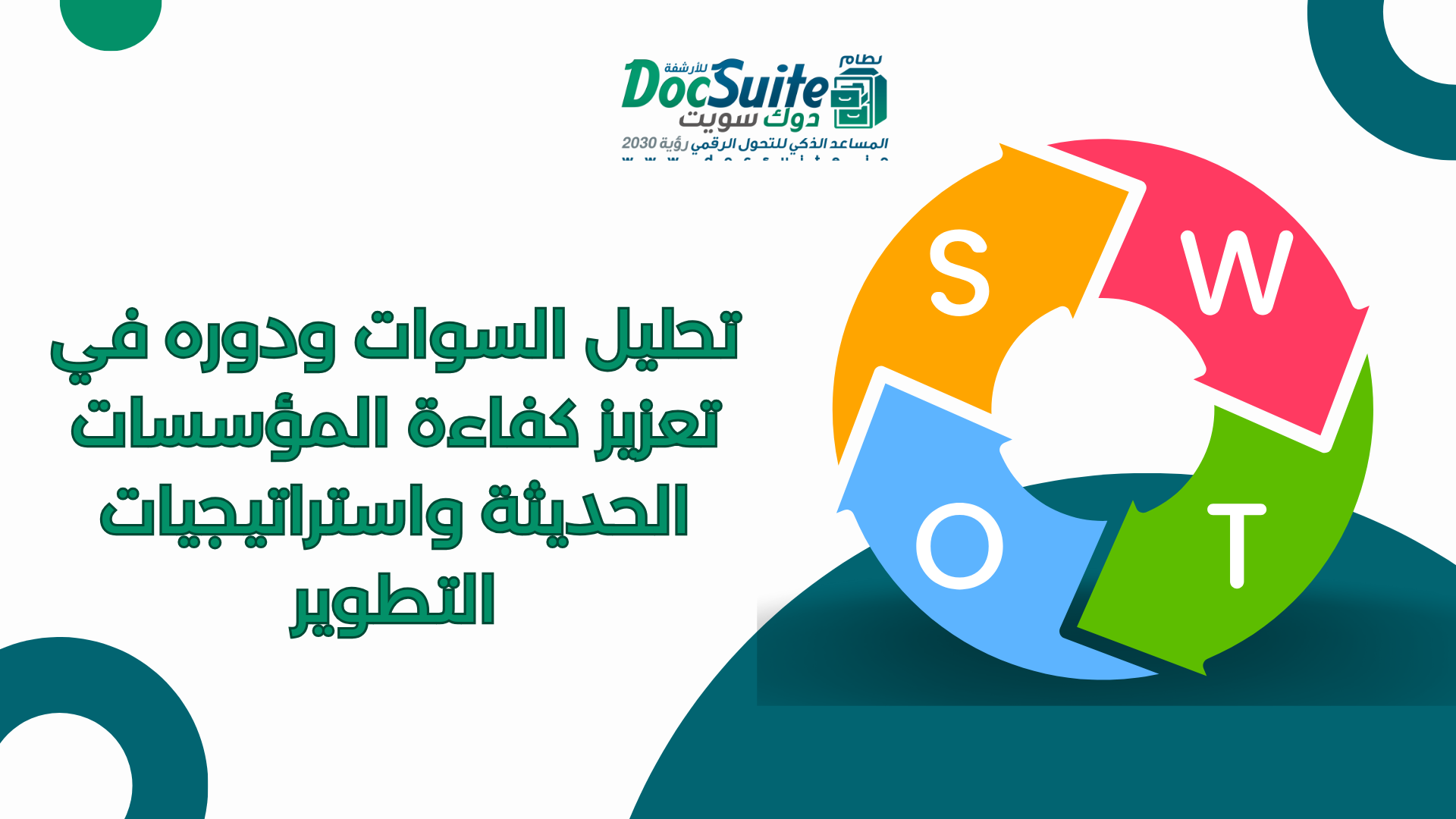
SWOT analysis (SWOT Analysis is a strategic tool used by organizations and individuals to accurately understand their current situation in order to make better decisions and develop more effective future plans. The analysis is based on studying four key elements that represent the strengths and weaknesses within the organization, in addition to the opportunities and threats present in the surrounding environment.
SWOT analysis consists of four main axes:
Strengths (Strengths)
These are the positive factors that an organization possesses and that give it distinction from others, such as expertise, resources, competencies, a good reputation, and advanced technologies.
Weaknesses (Weaknesses
These are the aspects that the organization needs to improve, including deficiencies in some skills, lack of resources, poor organization, slow procedures, or any factor that hinders performance.
OpportunitiesOpportunities)
These are external factors that can be exploited to achieve growth or expansion, such as positive market changes, new technologies, low competition, or supportive legislation.
threats (Threats
These are external challenges that may negatively affect the organization, such as increased competition, economic changes, technological risks, or new government policies.
The recognition by organizations of the importance of SWOT analysis has become a necessity in a time of accelerating technological and economic changes, as this management approach enables access to a clear vision of the strengths and weaknesses within the organization, in addition to understanding the opportunities and threats surrounding it, making the strategic planning process more realistic and accurate.
SWOT analysis is characterized by being flexible and applicable in various sectors, whether educational, health, governmental, or commercial, because it is based on studying four main axes that form the core of decision-making.
Its effectiveness increases when it is supported by modern systems that collect and organize data systematically, such as the DOC Suite system.HR enables organizations to move from paper-based management to integrated electronic management, which facilitates the process of collecting and analyzing information within a comprehensive analytical framework.
The system also contributes to organizing administrative documents and procedures, which makes data clearer during the application of SWOT analysis, and enhances the management’s ability to assess actual strengths and identify challenges in a way that is based on accurate information and not just estimates.
With the increasing use of modern technologies and the automation of procedures, organizations have become able to integrate SWOT analysis into their daily operations, so that it is automatically updated when new information becomes available, making SWOT a living tool that is constantly evolving and not just a planning sheet that is prepared once and then left on the shelf.
This integration of analysis and modern electronic systems forms a strong foundation for building more flexible institutions that are better able to adapt to future changes.
The role of SWOT analysis in promoting internal development and improving operational efficiency
Transforming the analysis process into a practical tool is what makes SWOT analysis an essential part of internal development within modern organizations, as it helps to identify weaknesses that need improvement, whether in human resources, work procedures, or organizational practices, and at the same time contributes to highlighting strengths that can be built upon to develop innovative solutions that support growth.
This process becomes even more valuable when the analysis is combined with intelligent electronic systems such as DocSuite.HR, which works to organize administrative communications and automate procedures in a way that makes the organization's data readily available, thus saving time, reducing errors, and making the work environment more efficient.
Through SWOT analysis, an organization can identify operational gaps that affect productivity and work to address them using advanced AI-based tools – the same technologies that DocSuite relies on.HR in improving managerial performance.
Analysis also enables organizations to identify opportunities available in the market or sector, and to invest in them to achieve a competitive advantage, while assessing potential threats and developing plans to mitigate their effects.
Integrating SWOT analysis into organizational development processes leads to improved human resource management, enhanced organizational culture, and the development of a more harmonious digital work environment, especially when using an advanced system that ensures secure and flexible data storage and documentation of administrative decisions.
Through this link between analysis and technology, organizations can develop accurate strategies that enhance their ability to achieve their operational and administrative goals in a sustainable manner.
The importance of SWOT analysis in building future corporate strategies based on accurate data
Guiding the organization towards a clearer future begins with understanding its current situation, and this is what SWOT analysis achieves as a strategic tool that helps management assess the internal and external environment and develop long-term plans based on real data.
By having a clear vision of its strengths, an organization can leverage its potential to develop its services or products, while addressing weaknesses through specific development plans.
The impact of this analysis increases when it is linked to systems that rely on modern data collection technologies such as DocSuite.HR, which enables the updating of documents and the coordination of administrative procedures in a way that makes information available, interconnected and more analyzable, thanks to its advanced capabilities, makes it possible to convert the results of SWOT analysis into executive action plans based on accurate data obtained from a central system that manages administrative documents and communications within a secure electronic environment.
The analysis also supports organizations in anticipating and quickly exploiting future opportunities before competitors, as well as understanding the nature of potential risks and suggesting practical ways to deal with them.
The importance of this analysis is evident in both large and small organizations, as it helps in directing resources correctly, prioritizing investments, and ensuring that all development steps are based on a clear vision and not just random decisions. As the market continues to evolve and new technologies emerge, SWOT analysis becomes an essential and indispensable tool in preparing future strategies that rely on data, artificial intelligence, and digital transformation.
Understanding the details of SWOT analysis is essential for obtaining accurate results during planning. Therefore, in the following points, we review the most important practical aspects that help organizations apply this analysis professionally, supporting decision-making and contributing to building clearer and more sustainable strategies.
- Components of basic SWOT analysis within the organization
Internal strengths.
Weaknesses affecting performance.
Opportunities that can be invested in.
Potential threats in the external environment.
The link between analysis and strategic planning.
- Steps to professionally implement SWOT analysis within organizations
Data was collected from multiple sources.
Organize documents and figures in an accurate manner.
Using technical analysis tools.
Evaluate and present the results clearly.
Transforming outputs into actionable, practical plans.
- Benefits of SWOT analysis when linked to digital transformation
Improving corporate data management.
Enhancing the accuracy of analysis and the speed of task completion.
Supporting decision-making based on reliable information.
Improving the quality of administrative development processes
Reducing reliance on paper documents.
This article on SWOT analysis reaffirms its indispensable role in strategic management, providing a comprehensive view that helps organizations accurately understand their environment and confidently define their future steps. With the rapid development of modern technologies, SWOT has become even more effective when integrated with advanced electronic management tools such as DOC Suite.HR contributes to organizing documents, procedures, and communications within a smart digital environment, making the process of collecting, updating, and analyzing data easier and more reliable, and enhancing the organization's ability to make accurate strategic decisions based on factual information, not guesswork.
This integration of analysis and technology represents a significant turning point towards increasing productivity and competitiveness, making organizations more prepared to face future changes steadily and effectively.