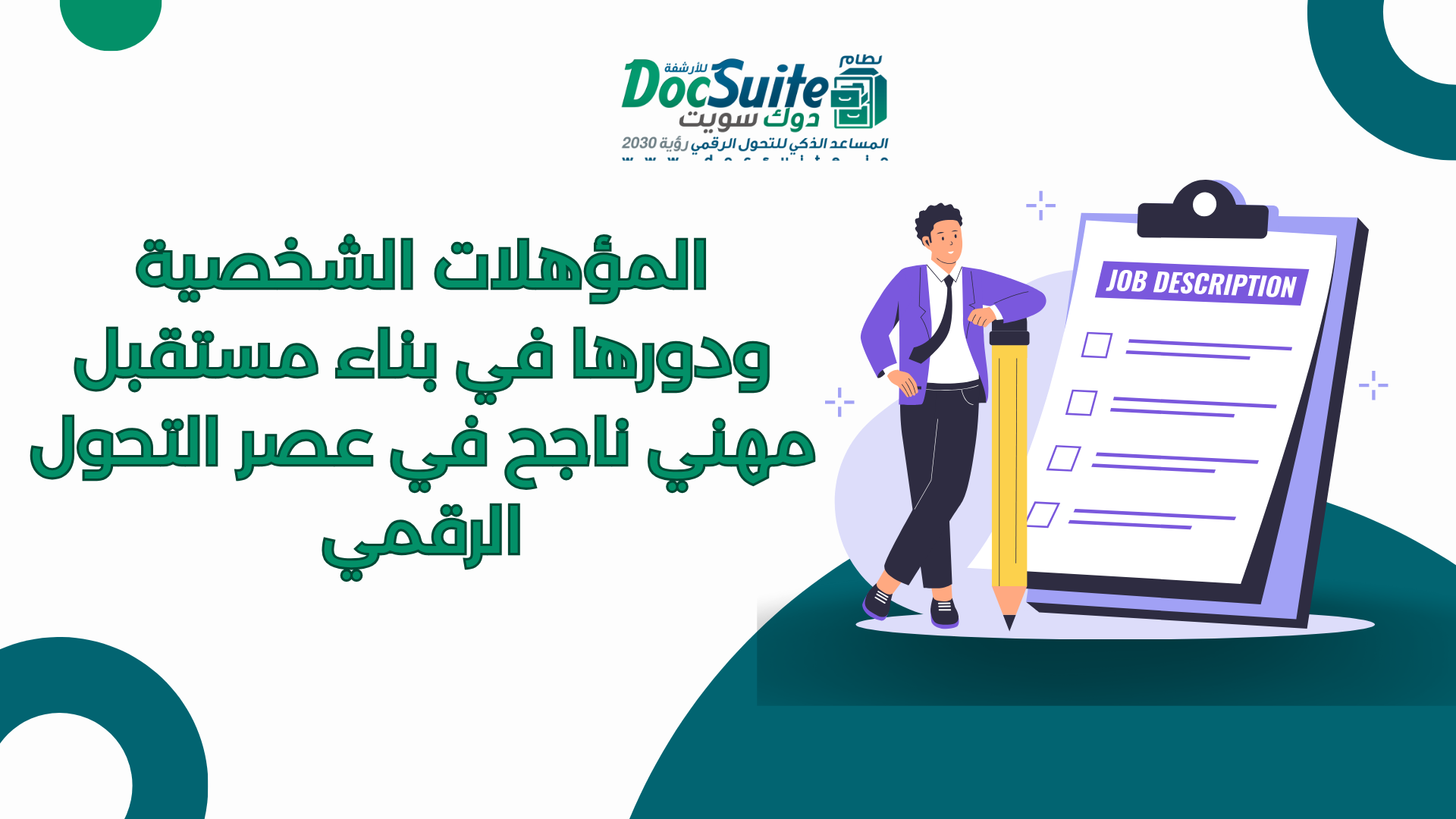
Personal qualifications are at the forefront of the elements that make a difference in an individual’s career path. They are not just fleeting skills or side qualities, but rather represent the compass that guides the individual within the work environment, especially in a time that is changing rapidly and depends on digital transformation in everything.
In this context, the presence of modern systems such as smart human resources systems, which help to organize data, manage documents and improve the job experience, becomes part of the environment that supports building these qualifications and enhances their value within institutions.
The concept of personal qualifications and their importance in the modern professional environment
Personal qualifications represent a combination of the qualities, abilities, and skills that an individual possesses, which determine how they deal with tasks, pressures, and challenges within the work environment. They are not just academic certificates or training courses, but rather the employee’s ability to communicate clearly, manage time, solve problems, adapt to rapid changes, in addition to thinking and analytical skills and the ability to work within a team.
These elements together form the complete picture of the individual within the organization, and determine whether he is able to develop or stand still. With organizations moving towards digital transformation, personal qualifications have become more important, because they are directly related to the employee’s ability to deal with modern systems, understand electronic processes, and use artificial intelligence technologies and advanced administrative tools.
Here, the role of advanced digital systems that organize administrative communications and collect documents within a single platform becomes apparent, enhancing a work environment that helps the employee develop their personal qualifications. Clarity, organization, and ease of access to information give the employee the ability to focus on developing themselves instead of being preoccupied with paper chaos or tedious procedures. This creates an environment that raises the quality of professional behavior and allows the employee to demonstrate the best version of their skills and abilities to achieve professional and administrative goals.
The impact of personal qualifications on performance and interaction within organizations
Personal qualifications directly affect an employee's performance and ability to interact effectively within the organization. An individual who possesses strong communication skills, knows how to manage their time, and has sufficient flexibility to adapt to changes is someone who can quickly overcome obstacles, integrate with the team, and build balanced professional relationships. This type of employee is more productive because they are not easily affected by chaos or daily pressures, but rather deal with them with a conscious and organized mindset.
With modern electronic systems that unify administrative communications and document procedures clearly and systematically, the employee becomes able to work within a stable environment that helps him develop his personal qualifications, because it removes many traditional obstacles such as lost papers, crowded informal communication, or lack of clarity in tasks, and thus performance develops and harmony between teams increases.
This helps management to make accurate decisions based on documented data rather than expectations or personal impressions. These qualifications also make the employee more prepared to face modern technological challenges that have become part of every organization, which makes the role of digital human resources systems more important because they provide a context that raises the quality of performance and enables the employee to invest his skills in a productive and continuous way.
Modern technology and its role in enhancing personal skills within the work environment
Developing personal qualifications is no longer based solely on experience or direct training, but is now linked to the employee’s ability to use and employ technology in their daily work. The modern technologies that institutions rely on today provide a practical environment that helps the employee improve their skills, organize their time, and improve how they deal with information.
When an employee relies on integrated electronic platforms that provide him with the required documents, define tasks, and clearly display his performance record, he becomes able to develop self-management and commitment skills. Electronic data also helps him see his weaknesses and strengths, which promotes a culture of continuous development.
Systems based on artificial intelligence and cybersecurity help automate procedures and manage administrative communications. This reduces the burden on employees and gives them more space to learn, develop, and improve the quality of their personal qualifications, because technology saves time and improves organization, making the employee more focused, calm, and productive.
This transforms the development of personal skills into a natural part of the organization's own evolution. Thus, the smart work environment becomes a place where individual and collective performance flourish, where digital organization and continuous professional development combine in a balanced equation that supports success.
Principles of developing personal skills within organizations
Personal qualifications form an important foundation for building a strong team capable of meeting the daily challenges of work. Developing these qualifications within organizations requires following clear principles that help employees grow and improve their capabilities. Effective communication, defining responsibilities, organizing data, and having an accurate system that records performance are all factors that raise the quality of personal qualifications and support professional development.
In the modern work environment that is moving towards digital transformation, reliance on electronic systems plays a key role in enhancing these personal qualifications, because it provides an organized environment that gives the employee the ability to train continuously and work within a clear and transparent framework. These principles can be explained through three subheadings:
Developing personal qualifications requires a balanced environment that combines clarity, organization, and employee support. The following pillars help the organization build a professional generation capable of achieving its goals with confidence and efficiency.
Enhancing effective communication skills
- It helps build strong professional relationships.
- It reduces misunderstandings between employees.
- It makes collaboration between departments faster and clearer.
Organizing tasks and distributing roles
- It prevents conflicting work within the team.
- It gives the employee a clear view of their duties.
- It helps management to accurately assess performance.
Supporting continuous development through digital tools
- It makes the training easier and clearer.
- It provides reports that help improve weaknesses.
- It promotes a culture of continuous learning within the organization.
The future of personal qualifications in light of digital transformation and smart technology
The future of personal qualifications is heading towards a stage where the employee becomes part of an integrated digital system that relies on artificial intelligence, data analysis, and process automation, making professional development a continuous process, not a temporary event. The professional future will not be limited to traditional certificates or limited experience, but will be based on the individual’s ability to learn quickly, adapt to digital tools, understand data, and use modern communication technologies.
Here, the role of electronic human resources systems becomes more apparent because they provide an environment that helps the employee acquire new skills and develop personal qualifications based on accurate reports and realistic data.
Self-development becomes part of the organization's culture, because the digital system facilitates tasks, organizes documents, saves data, and makes procedures more flexible, thus preparing the employee to focus on honing their skills and developing their professional personality.
As technologies advance, organizations become more dependent on employees who possess strong personal qualifications such as analytical thinking, time management, flexibility, the ability to learn, and teamwork. These qualifications become more effective when working within a modern digital environment that relies on smart management systems that unify efforts, reduce errors, and propel the organization towards a more prosperous and sustainable future.